Sugar-free desserts are not automatically healthy, they are just sugar-free. Those are two very different claims, and dessert labels blur them constantly.
The moment “sugar-free” appears on packaging, it reads as permission. No sugar, no guilt, no consequences. But sugar is only one variable in what makes a dessert work with your body instead of against it. Remove it without addressing anything else, and you are often left with something just as disruptive, wearing a healthier name.
What “Sugar-Free” Usually Means in Practice
Most commercial sugar-free desserts replace sugar with sugar alcohols like maltitol or sorbitol, or with artificial sweeteners. These do not raise blood sugar the way sugar does, which is the entire selling point. But they come with their own tradeoffs: sugar alcohols are notorious for causing bloating and digestive distress in amounts most people would not think twice about, and some research suggests artificial sweeteners may still affect insulin response and gut bacteria, even without the calories.
The Other Ingredients Sugar-Free Labels Do Not Mention
When sugar is removed from a product, something has to take its place, not just in sweetness, but in texture, moisture, and shelf life. That something is often a combination of ingredients that rarely appear on the front of the pack.
Saturated fats are frequently added in higher amounts to compensate for the texture sugar provides. Sodium levels tend to rise too, partly for preservation and partly because salt amplifies sweetness perception, which matters more when the sweetener is weaker. Artificial colorings keep the product looking appealing without the caramelization that sugar naturally produces during baking. And preservatives extend the shelf life of something that, without sugar acting as a natural preservative, would spoil far faster.
None of these appear in the “sugar-free” claim on the front of the pack, because none of them are sugar. But they are there, and they are doing their own work inside your body. A product can be technically sugar-free and simultaneously high in sodium, saturated fat, artificial additives, and compounds that affect gut health and inflammation in ways that have nothing to do with blood sugar.
The front label answers one question and one question only. The ingredient list is where the real picture lives.
The Refined Flour Problem Sugar-Free Labels Ignore
Removing sugar does nothing about the white flour still sitting in most sugar-free baked goods. Refined flour breaks down into glucose almost as fast as sugar itself does, which means a “sugar-free” muffin made with white flour can spike blood sugar nearly as much as one made with sugar. The label focuses on one ingredient and ignores the one doing just as much damage.
Why This Matters More Than It Sounds
This is not about disqualifying sugar-free products altogether, it is about reading past the front label. A dessert that manages blood sugar well needs more than one ingredient removed, it needs the whole method rebuilt around fiber, protein, and slower-digesting ingredients working together. That is the difference between a dessert engineered to avoid one ingredient and a dessert engineered to actually support your body.
What to Look For Instead
Rather than scanning for “sugar-free,” check whether fiber and protein are actually present in meaningful amounts, and whether the flour used is a whole grain or nut-based alternative. Those two details tell you far more than any front-of-package claim ever will. This breakdown of the two core dessert principles goes deeper into exactly what to look for.
Sugar-free is a marketing category. Functional is a method. They are not the same thing, and only one of them actually delivers what it promises.
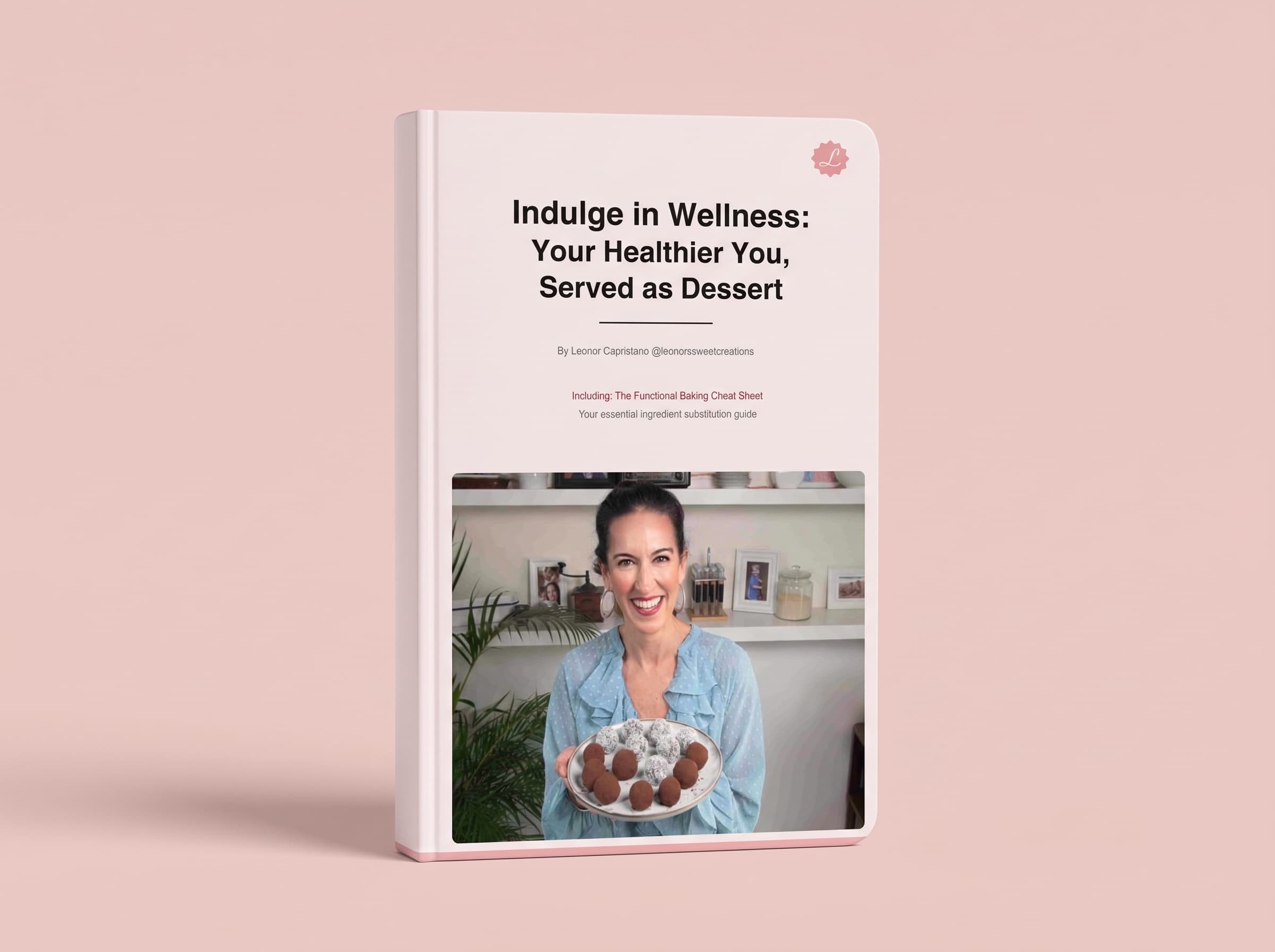
If this shifted how you read a dessert label, my free ebook goes deeper into exactly this kind of nuance, the small print that actually changes how a dessert behaves in your body. Grab it here.