No, they are not. Both come from sugarcane, but cane syrup is the juice boiled down with nothing taken out, and molasses is what is left after the sugar has been taken out. That one difference changes their color, their sweetness and how they behave in your baking.
If you have a recipe that calls for one and a bottle of the other, keep reading. By the end you will know when you can swap them and when you should not.
How cane syrup is made
Cane syrup is made the same way as maple syrup. Fresh sugarcane is pressed, and the juice is boiled down slowly until it thickens. Nothing is removed along the way, so all of the cane’s sugar stays in the syrup.
The result is a deep amber syrup, a shade darker than golden syrup, with notes of dark sugar and rum. It tastes like molasses without the bitterness and the sharp edge. Some bottles are labeled “ribbon cane syrup,” after the sugarcane variety they are made from.
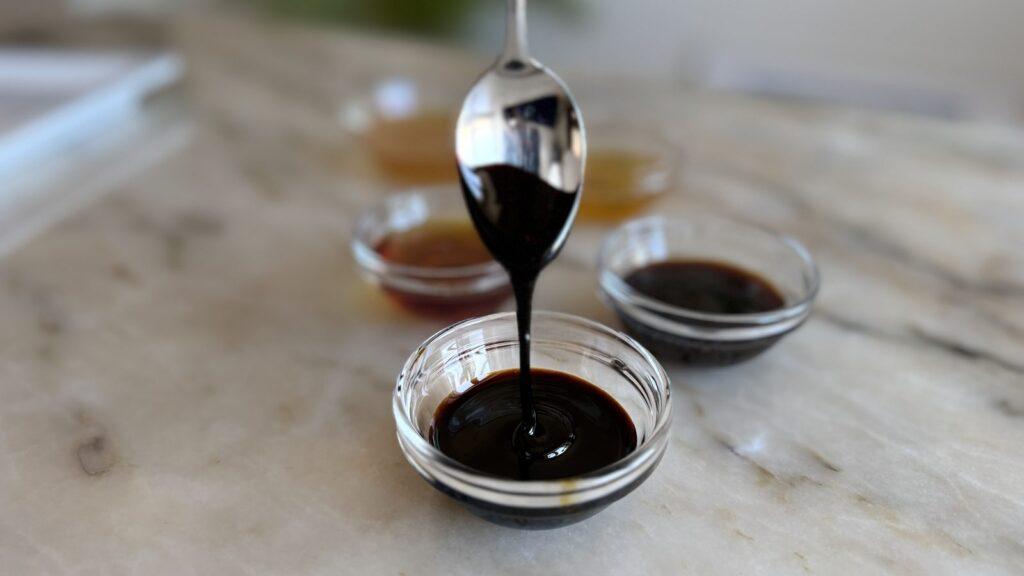
How molasses is made
Molasses is a by-product of making sugar. Cane juice is boiled until sugar crystals form, the crystals are taken out, and the thick syrup that stays behind is molasses. Each time it is boiled again, more sugar is removed and the flavor gets stronger.
- Light molasses comes from the first boiling. It is mildly sweet with just a hint of bitterness.
- Dark molasses comes from the second boiling. It is thicker, less sweet and more bitter.
- Blackstrap molasses comes from the third boiling. Most of the sugar has been removed, so it is intensely bitter.
So the real difference is this: cane syrup keeps all its sugar, and molasses is defined by the sugar that was taken out of it.
Where golden syrup and treacle fit in
This is where most of the confusion comes from, especially if you bake from British recipes.
- Golden syrup (the one in the green and gold tin) is a refined syrup made from cane sugar. It is lighter, sweeter and more buttery than cane syrup. It is not the same product, even though it is often described that way.
- Light treacle is the British name for a light, first-boiling syrup, and in everyday use it is often treated as golden syrup.
- Black treacle is a mix of molasses and syrup. It is the closest British match to blackstrap molasses, but thicker and smoother.
If a British recipe says golden syrup and you only have cane syrup, you can use it, but expect a darker color and a deeper flavor.
Cane syrup vs molasses at a glance
| Cane syrup | Molasses | |
|---|---|---|
| Made from | Sugarcane juice, boiled down | What is left after sugar is extracted |
| Sugar removed? | No | Yes, more with each boiling |
| Color | Deep amber | Brown to almost black |
| Flavor | Dark sugar, rum, no bitterness | Caramel to strongly bitter |
| Sweetness | Sweeter | Less sweet, especially blackstrap |
| Best for | Pancakes, glazes, pecan pie, sauces | Gingerbread, molasses cookies, dark loaves |
Can you substitute one for the other?
Yes, with limits.
Cane syrup instead of light or dark molasses: swap one for one. Your bake will be lighter in color and less intense in flavor, and slightly sweeter. In recipes where molasses is the star, like gingerbread, you will notice the difference. In recipes where it is one flavor among many, you probably will not.
Molasses instead of cane syrup: use light molasses, one for one, if you like a stronger flavor. Avoid dark and blackstrap here. They will overpower anything delicate.
Blackstrap molasses: only use it when the recipe asks for it by name. It is too bitter to stand in for anything else.
Substitutes for cane syrup
If you cannot find cane syrup, these all work one for one. Each changes the result a little, so pick by what matters most in your recipe.
- Golden syrup: the closest in texture. Lighter in color and more buttery.
- Honey: similar sweetness, but it browns faster, so check your bake a few minutes early.
- Dark corn syrup or sorghum syrup: close in color, milder in flavor.
- Maple syrup: thinner and with its own flavor. Best for pancakes and glazes, less so for baking.
Not every liquid sweetener behaves the same way in your body either. I wrote about that in the truth about natural sweeteners.
How cane syrup works in functional baking
In my kitchen I always ask what an ingredient is doing in a recipe before I swap it. A liquid sweetener like cane syrup does three jobs at once: sweetness, moisture and flavor. When you replace it, you need something that covers all three, which is why a thin syrup or a dry sugar rarely works one for one.
I rarely bake with cane syrup myself. But the question behind this post, are these two the same, comes up with almost every ingredient, and the answer always starts in the same place: look at the job before you look at the label.
If you want to see the same idea applied to fat, I wrote about it for butter substitutes in baking. The logic is the same: replace the job, not the name.
Frequently asked questions
Is cane syrup the same as molasses?
No. Cane syrup is sugarcane juice boiled down with all its sugar. Molasses is what remains after sugar has been extracted from boiled cane juice.
Is cane syrup the same as golden syrup?
No. Golden syrup is a refined syrup made from cane sugar. It is lighter and sweeter than cane syrup.
Can I use molasses instead of cane syrup?
Yes, use light molasses one for one. The flavor will be stronger and slightly bitter. Avoid blackstrap.
What is ribbon cane syrup?
It is cane syrup made from ribbon cane, a sugarcane variety grown for syrup making. It is made the same way: the juice is pressed and boiled down.
Get the 9 swaps I use most
I put the substitutions I rely on most, from flours to fats to sweeteners, into a free guide with a one-page cheat sheet you can keep on your fridge.
Your Leonor