It happens to everyone, including me. You follow the steps, you use good ingredients, and it still comes out wrong. Too dense, too dry, too wet, falling apart, or somehow flat despite everything being right on paper.
The good news is that most healthy dessert fails come from a small handful of causes. Once you recognise them, you can usually rescue the bake, or at least know exactly what to change next time.
When It Is Too Dense or Heavy
When It Is Too Dense or Heavy
This is the most common one. A functional dessert that turns out like a brick almost always has too much of the binding ingredients and not enough lift.
Dates, nut butters, and mashed banana are wonderful binders, but they are heavy. If a recipe leans hard on them without something to lighten the texture, the result sinks. The fix is usually air: whipped coconut cream folded in gently, whisked aquafaba, whipped egg whites or simply not overworking the batter once the dry meets the wet.
If the density is coming from the flour rather than the binders, the ratio is likely off. Almond flour gives richness but very little structure on its own. Coconut flour is even denser and absorbs far more liquid than most people expect. If you are using either of these as the only flour in a recipe, adding a small amount of tapioca or arrowroot starch — no more than two tablespoons per cup of flour — gives the batter the elasticity it is missing and lifts the final texture considerably.
Overmixing is another cause that gets overlooked. Once the wet and dry ingredients come together, mixing further develops the starches and makes the batter tighter and heavier. Stir until just combined and stop there.
Finally, check your leavening. Baking powder loses its potency over time, and a tin that has been open for more than six months may not be doing much at all. If your bakes have been consistently dense lately and nothing else has changed, replacing the baking powder is worth trying before you adjust the recipe.
When It Is Too Dry or Crumbly
Dryness comes down to one of two things: not enough fat, or not enough moisture-holding ingredient.
Almond flour drinks up liquid and needs fat alongside it to stay tender. If your bake is crumbly, next time add a little more coconut oil, a spoon of nut butter, or an extra date or two blended into the wet mix. If it is already baked and dry, a light brush of maple syrup or a spoon of coconut cream on the side can save the plate.
If the crumble is happening in a no-bake recipe rather than a baked one, the most likely cause is that the dates were too dry to begin with. Medjool dates should feel soft and almost sticky. If yours are firm, soak them in warm water for ten minutes before blending, and add a tablespoon of the soaking water to the mix. That alone is usually enough to bring a crumbly no-bake base together.
For baked recipes, overbaking is also a common culprit. Gluten-free bakes dry out faster than traditional ones because there is no gluten network holding the moisture in. Pull the tin out a few minutes earlier than you think you need to, and let the residual heat finish the job. The texture almost always improves significantly once the bake has cooled completely, so give it at least thirty minutes before you decide it is dry.
A small amount of apple sauce or mashed ripe banana added to the wet ingredients also works well as a moisture fix. Neither changes the flavour noticeably in most recipes, and both add just enough softness to change the texture.
When It Will Not Set
No-bake desserts that stay soupy are almost always a temperature or ratio problem. Coconut cream that was not cold enough, cashews that were not soaked and blended smooth, or simply not enough chilling time.
Give it longer in the fridge before you decide it has failed. Most no-bake bases firm up far more than you expect after a few hours, and some only truly set overnight.
If time is not the issue, here are the most common causes and fixes:
The coconut cream was not full-fat. Coconut milk from a carton does not set the same way as full-fat coconut cream from a can. If the recipe calls for coconut cream, that is the one to use. Check the label — it should have at least 60% coconut extract.
The cashews were not blended long enough. Cashew-based fillings need 3 to 4 minutes in a powerful blender to become completely smooth. If the cashews were blended too quickly, the filling stays grainy and loose instead of firming into a cream. Soaking them for at least 4 hours first makes all the difference.
The agar-agar did not boil. If your recipe uses agar-agar as a setting agent, it must reach a full boil and stay there for at least 2 minutes to activate. A gentle simmer is not enough. If it never boiled properly, the dessert will not set regardless of how long it chills.
There was too much liquid. Adding extra fruit juice, plant milk or syrup beyond what the recipe specifies dilutes the setting agents. Stick to the ratios until you understand how each ingredient behaves.
The tin or dish was too warm. Pouring a filling into a tin straight from the dishwasher or a warm kitchen can delay setting significantly. A quick chill in the fridge before adding the filling helps.
If a no-bake dessert genuinely will not set after overnight chilling, the fastest fix is to freeze it for 45 minutes to an hour. It changes the texture slightly, but it saves the dessert.
One less common but frustrating cause: certain fresh fruits prevent agar-agar from setting entirely, no matter how long you chill or freeze. Pineapple, kiwi, papaya and mango contain natural enzymes that break down the proteins agar-agar needs to form a gel. If your recipe includes any of these fruits mixed into the filling, that is likely the reason it never set.
The fix is simple. Use these fruits only as a topping, added after the dessert has already set, or use them cooked or canned. Heat destroys the enzymes, so a briefly cooked or pasteurised version of the same fruit works perfectly inside the filling without affecting the set at all.
When It Tastes Flat
This one surprises people. A dessert can be technically perfect and still taste dull, and the answer is almost always salt or acid.
A pinch of good salt, or a squeeze of lemon or lime, does not make a dessert taste salty or sour. It makes it taste more like itself. If something you made felt like it was missing something, this is usually what it was.
Flatness is the fail people give up on too fast, because the dessert looks perfect and they assume the problem is the recipe itself. It rarely is. Most healthy dessert fails in the flavour department come down to that missing pinch of salt or squeeze of acid, and both are a five-second fix at the table rather than a reason to start over.
Vanilla is the other flavour amplifier that gets underestimated. A recipe that calls for vanilla extract and uses a poor-quality imitation instead of the real thing will always taste slightly hollow. Pure vanilla extract costs more, but a teaspoon does far more work than the same amount of synthetic vanilla flavouring.
Spices are worth checking too. Cinnamon, cardamom and ginger lose their potency quickly once ground. If your spiced bakes have been tasting muted lately, the spices themselves are the most likely reason. Buy them in small quantities and replace them more often than you think you need to.
One more thing worth saying: not every failed bake needs rescuing. Sometimes the fastest lesson is to note what went wrong, change one thing, and simply make it again. Baking is not a single high-stakes attempt. It is a conversation with your ingredients, and the more failures you read correctly, the shorter that conversation gets.
What Healthy Dessert Fails Are Really Telling You
Every one of these fixes comes from the same place: understanding what each ingredient was doing. A failure is not a verdict on you. It is information. Once you can read it, a dessert that went wrong becomes the fastest way to get better.
That is the whole reason I teach the way I do. Not so you can follow my recipes forever, but so you never feel stranded in your own kitchen again.
The Functional Desserts Program — where I teach ingredients, ratios, nutrition and recipe transformation in full — closes TONIGHT. This is the lowest price it will ever be. Join here before the doors close.
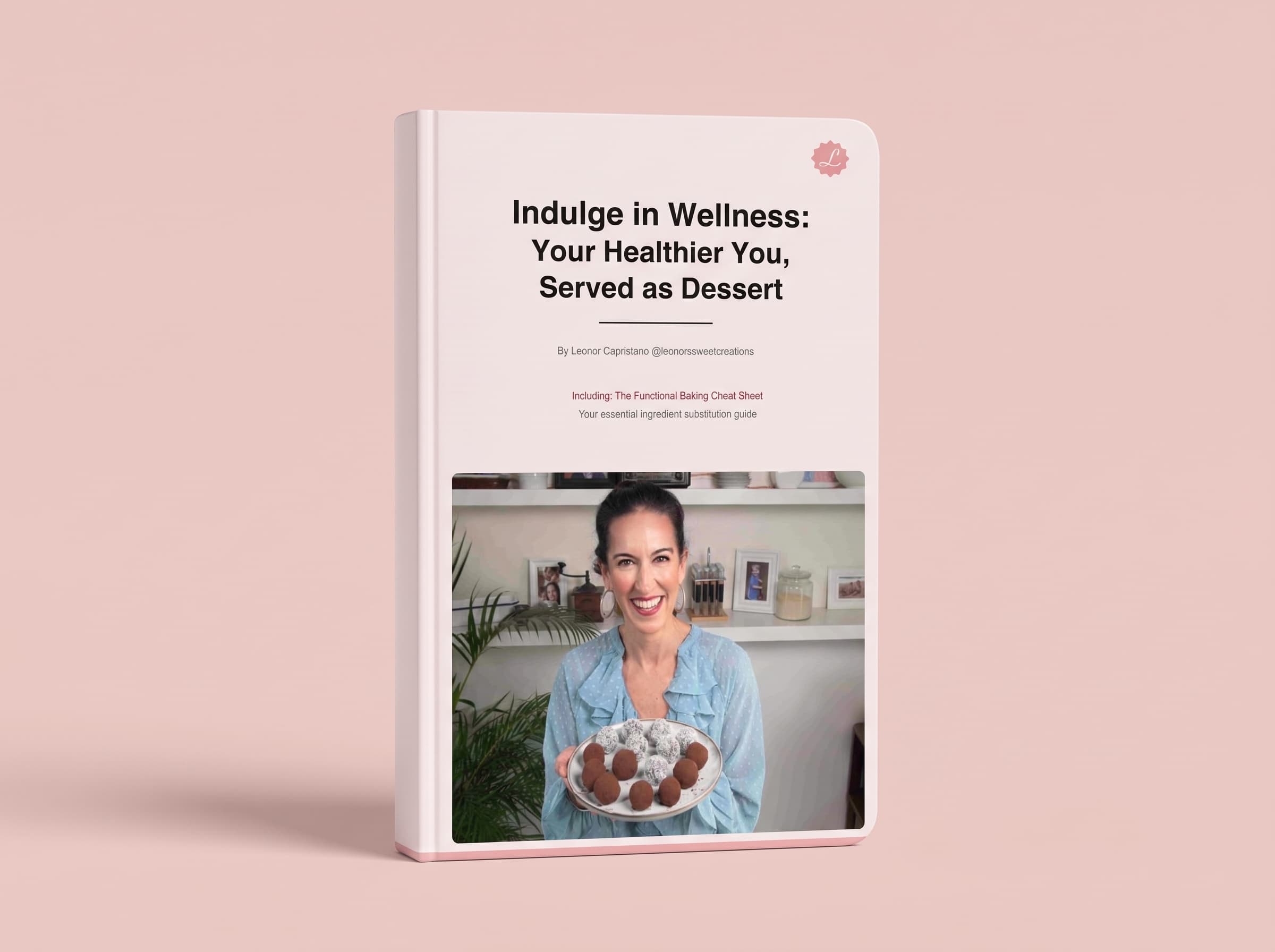
If you are looking for recipes to start with today, my e-book has seven healthy desserts , explained and ready to make. Get it here.
Have a sweet day,
Leonor.