If your gluten-free bakes keep coming out dry, the temptation is to change the flour.
Do not change the flour.
The flour is rarely the problem. What is almost always the problem is what is sitting around it.
Moisture in a baked good does not come from one source. It comes from fat, from the liquid in the batter, from the way those liquids are absorbed and held during baking. In a traditional recipe, gluten absorbs water during mixing and releases it slowly as the cake bakes. That slow release is what keeps the crumb moist for two days after it comes out of the oven.
Remove gluten and that mechanism disappears entirely. The batter goes in with the same amount of liquid, but nothing is holding it. It evaporates. The result is dry, often chalky, and worse the day after baking.
The solution is not more liquid. It is replacing the holding function.
Good fats do most of the work here. Nut butters, full-fat coconut oil, eggs where you are using them. These are not just flavour carriers. They bind moisture into the structure of the crumb and keep it there. A recipe with the right fat content will still taste moist on day three. A recipe that compensates with extra liquid but has insufficient fat will taste fine on the day and dry by the morning.
Psyllium husk is the other part. It absorbs many times its weight in water and forms a gel that holds moisture in the crumb the way gluten did. A quarter teaspoon changes the texture of an entire cake. Most free-from recipes skip it entirely, which is why most free-from cakes are dry.
This is not complicated. But it requires understanding what you are replacing and why. The flour is doing its job. It is the infrastructure around it that needs attention.
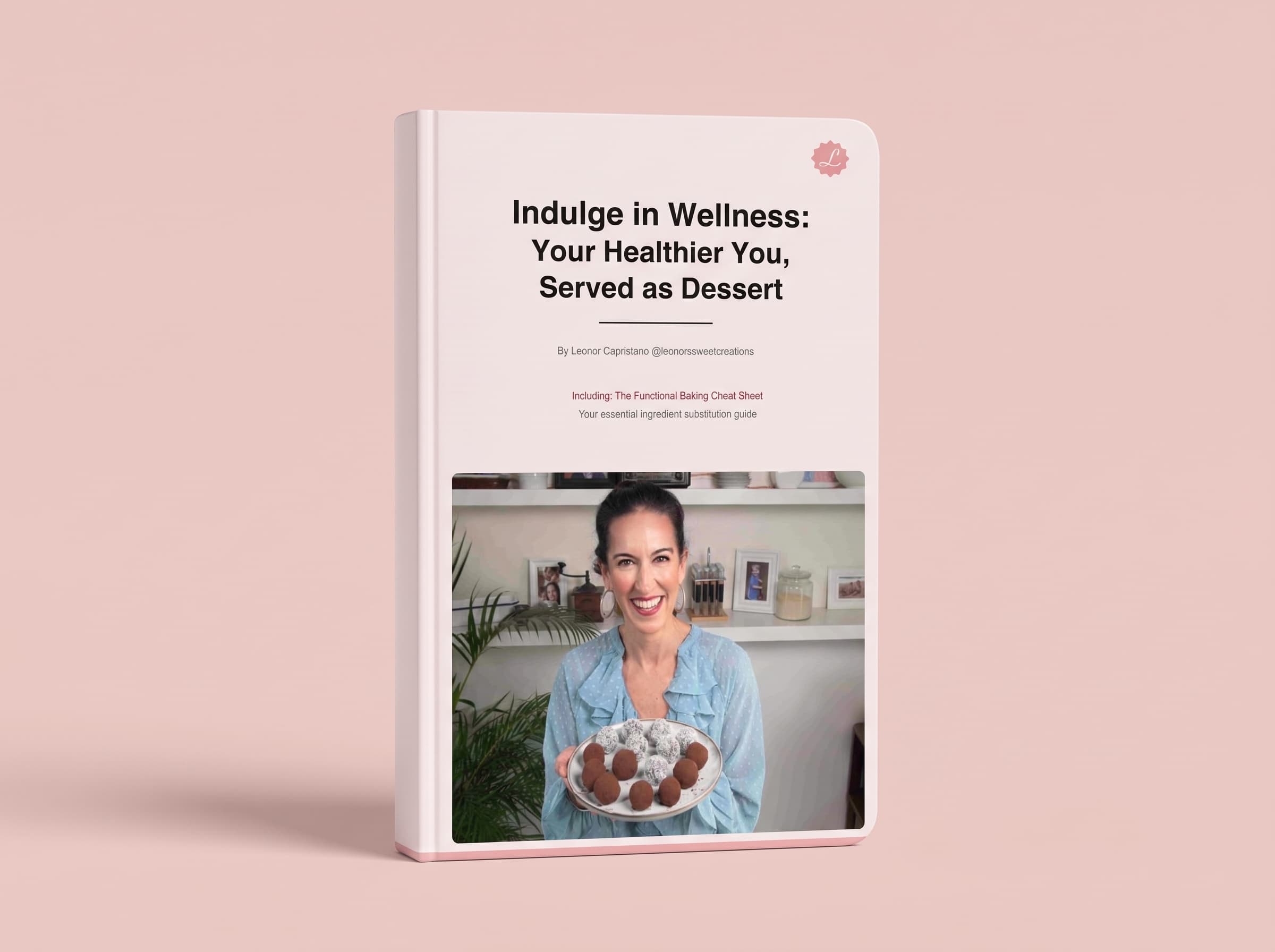
Get free recipe books with delicious healthy desserts and cakes, here!