The dessert is finished. What happens next splits into two versions.
In the first, you feel fine for twenty minutes. Then something dips. A low fatigue, a restlessness, a vague pull back toward the kitchen. By dinner you are hungrier than you should be.
In the second, you finish, you feel satisfied, and that is the end of it. You close the container and get on with your afternoon. The energy you had before is roughly the energy you have after.
The difference is entirely about functional dessert blood sugar response, and it comes down to ingredients.
What Refined Sugar Does to Blood Sugar
Without protein, fibre, or fat slowing things down, glucose floods the bloodstream fast. Insulin rushes to handle it, and after a concentrated sugar load, it often overcorrects, pulling blood glucose below where it started. That is the crash: fatigue, fog, hunger that returns far too soon.
People who experience the sharpest of those drops end up eating noticeably more in the hours that follow, simply chasing the level back to where it should have stayed. It is not a failure of willpower. It is a predictable response to a predictable set of ingredients.
There is a second layer underneath it. Refined sugar triggers a fast dopamine response, the kind researchers compare to other addictive triggers. Quick, real, followed by a drop. That drop is why you reach for more before the first piece has had a real chance to satisfy you.
What Functional Ingredients Change
A dessert built from whole ingredients does not create that cycle, because the ingredients will not allow it.
Sweetness from dates or ripe fruit arrives wrapped in fibre, which slows the absorption, which softens the rise, which means insulin never has to overcorrect.
Fat from coconut cream, almonds, or cashews does several jobs at once: richness, slower digestion, a satiety signal that actually holds.
Put fibre through the whole dessert, the way it naturally exists in almonds, dates, and fruit, and every stage of digestion slows down together. The research on fibre and fullness is about as settled as nutrition science gets.
Put those changes together and you get a dessert that delivers real pleasure without the rush, without the drop an hour later, without the guilt that tends to attach itself to that crash and call itself a wrong decision.
What That Actually Feels Like
This is what students describe more than anything else. Finishing something and simply feeling done. No second container, no fight against a craving. Just done.
That is how dessert was always supposed to work. Not a pleasure you pay for later. A complete moment that asks nothing more of you once it is finished.
The ingredients are the only thing that needs to change.
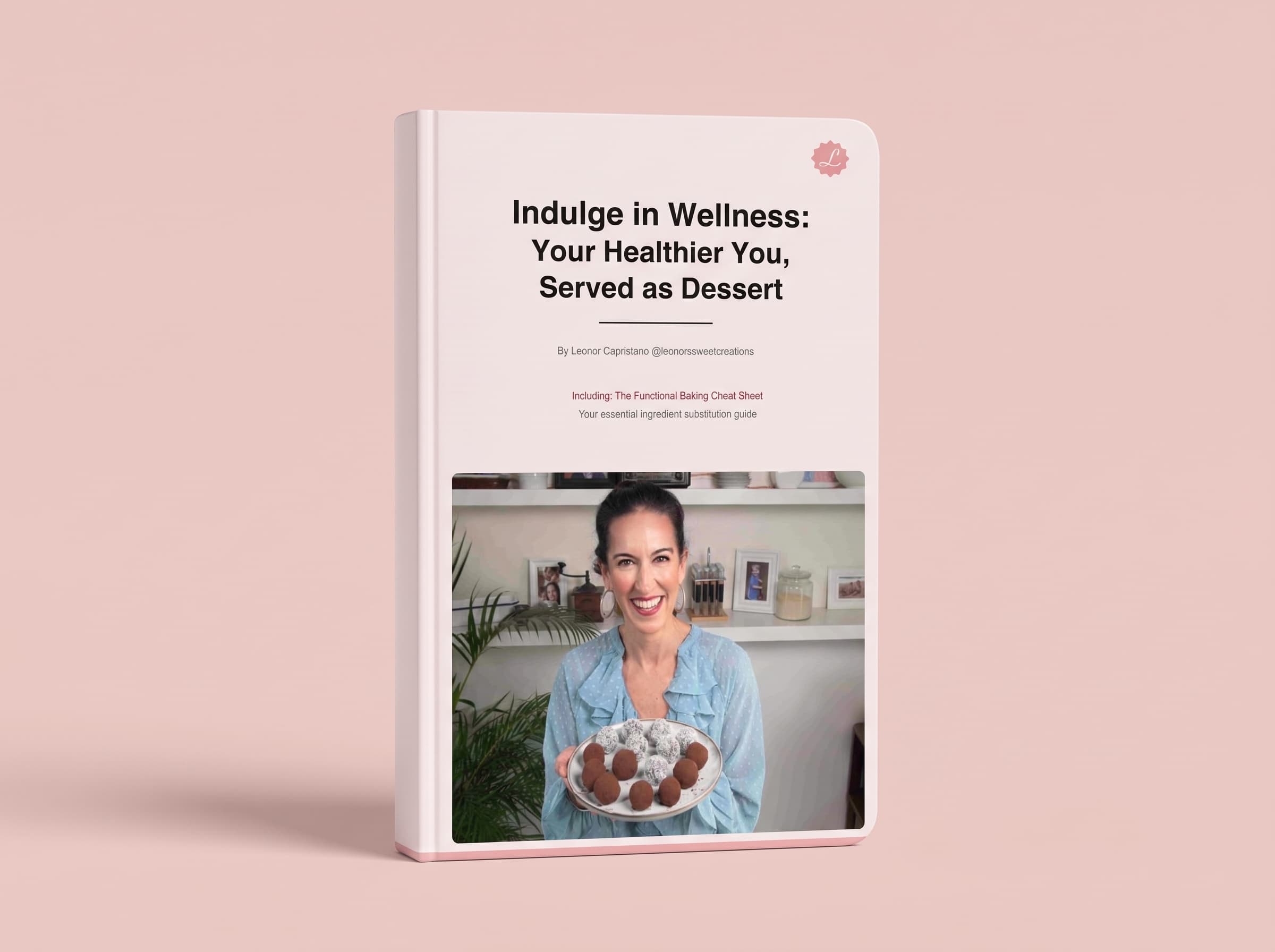
Something is coming in September. Five days, live, where I show you exactly why these desserts work. I will share the details soon. For now, get my free recipe books with delicious healthy desserts and cakes, here!